
Commercial and industrial · Licensed electrical contractor, Berlin
Battery storage and solar PV for businesses with high power consumption.
We size your battery to your load profile, supply it, install it, connect it to the grid and look after its operation. Before you invest, we tell you honestly whether it pays off – even if the answer is no.
For an initial assessment
Three documents are enough.
- 01Load profile – quarter-hourly values from your meter, ideally twelve months
- 02Electricity bill – a recent annual or monthly bill
- 03PV system – capacity and commissioning date, if available
From these we calculate what a battery would achieve for you. You receive the fixed price in writing.
Services
Battery storage
For commercial and industrial sites, sized to your load profile, up to medium voltage.
Learn moreStorage + PV
Store solar power and use it on site, as a new system or a retrofit.
Learn moreCommercial and industrial PV
Rooftop systems on halls and commercial buildings for businesses with high power consumption.
Learn moreO&M and asset management
Inspections, fault clearance and operation of existing PV systems, with monitoring in the portal.
Learn moreEV charging
Wallboxes for hotels and underground car parks, DC fast chargers for fleets, with battery storage if required.
Learn moreNegative price protection
What negative power prices cost your plant and how to limit the impact.
Learn moreAI Data Centre Power
Grid connection, DNO/TSO applications and commissioning for AI data centres, up to high voltage.
Learn more
Commercial and industrial battery storage
Cap load peaks
Where demand is metered, the highest quarter-hour of the year sets the capacity charge in the network tariff. The battery covers short peaks from its own reserve and so lowers the peak that is billed.
Use your own solar power
Whatever the PV system generates at midday beyond what the site needs is stored and consumed on site later, instead of being fed into the grid for a few cents.
Make use of cheap and negative-price hours
With a dynamic electricity tariff, the battery can charge during hours with low or negative wholesale prices. For PV systems commissioned since 25 February 2025, the feed-in support under the German Renewable Energy Sources Act generally lapses while prices are negative (Section 51 EEG); on a site with its own consumption, the battery absorbs this power.
How a battery project runs
01
Analyse the load profile
We analyse the quarter-hourly values from your meter and calculate what a battery would achieve on your site – covering peaks, self-consumption and tariff.
02
Design and quotation
Capacity, power, installation location and metering concept for your site, together with a binding quotation.
03
Supply and installation
Installation area, delivery, mounting and cabling up to the main distribution board.
04
Grid connection
Notification to the distribution network operator (DNO), meter and metering concept, testing and commissioning by our licensed electrical contractor.
05
Operation
We configure the controls to your objectives and keep an eye on the battery in operation.
When a battery pays off
In practice, mainly when three things come together:
- High electricity purchase price – every kilowatt-hour you use yourself replaces expensive grid supply.
- Daytime consumption – a large share of the solar power can be used on site.
- Pronounced load peaks – machines, cooling or charging points starting up at the same time.
Typical examples are cold stores, logistics with an electric fleet, bakeries, laundries, commercial kitchens and metalworking. If your profile does not fit, we tell you before we quote.
References: six completed rooftop systems
Six rooftop systems on halls and commercial buildings, 1,031.96 kWp in total, all commissioned in 2025. Capacity as recorded in the Marktstammdatenregister (the Federal Network Agency’s market master data register); photos from drone surveys of the completed systems.
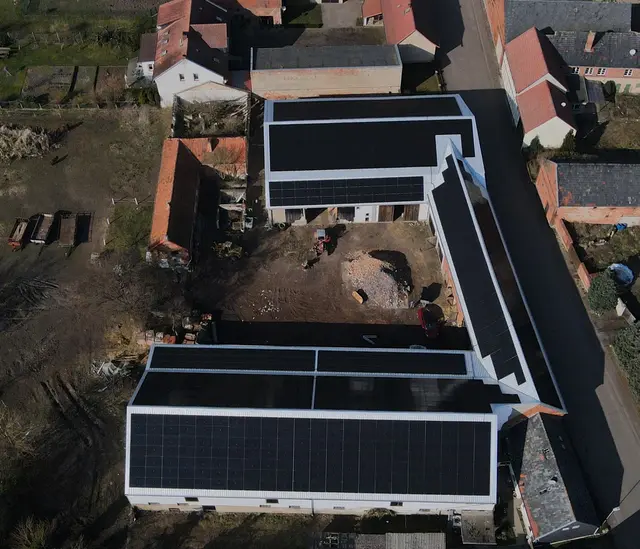
Poritz
328.41 kWp
- Type
- Rooftop system
- Federal state
- Saxony-Anhalt
- In operation since
- 2025
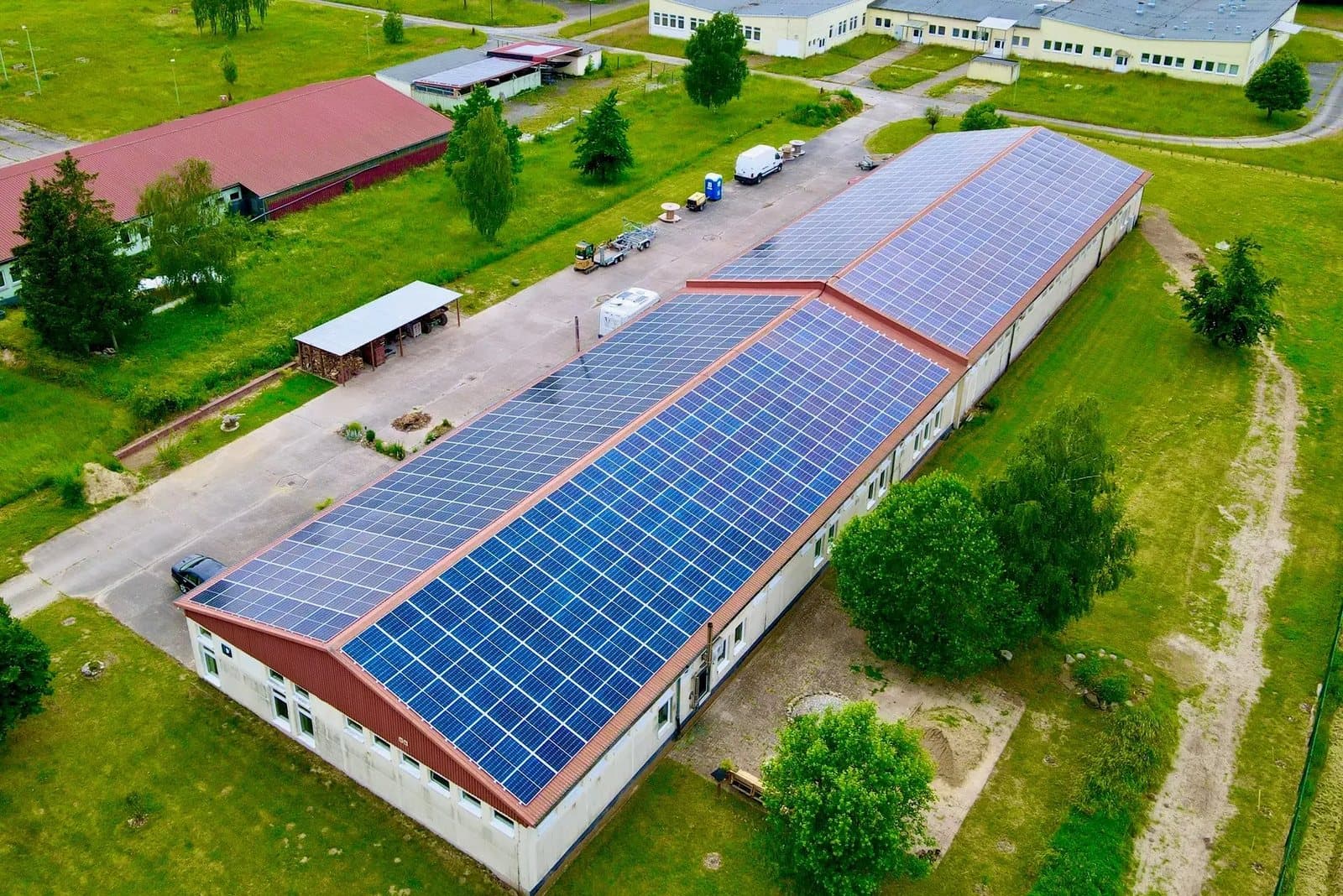
Basepohl
299.71 kWp
- Type
- Rooftop system
- Federal state
- Mecklenburg-Western Pomerania
- In operation since
- 2025
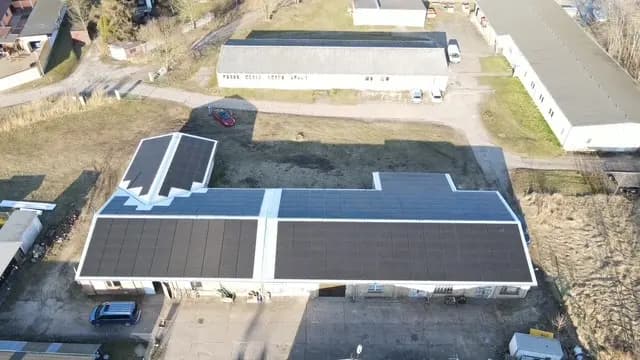
Ueckermünde
155.75 kWp
- Type
- Rooftop system
- Federal state
- Mecklenburg-Western Pomerania
- In operation since
- 2025
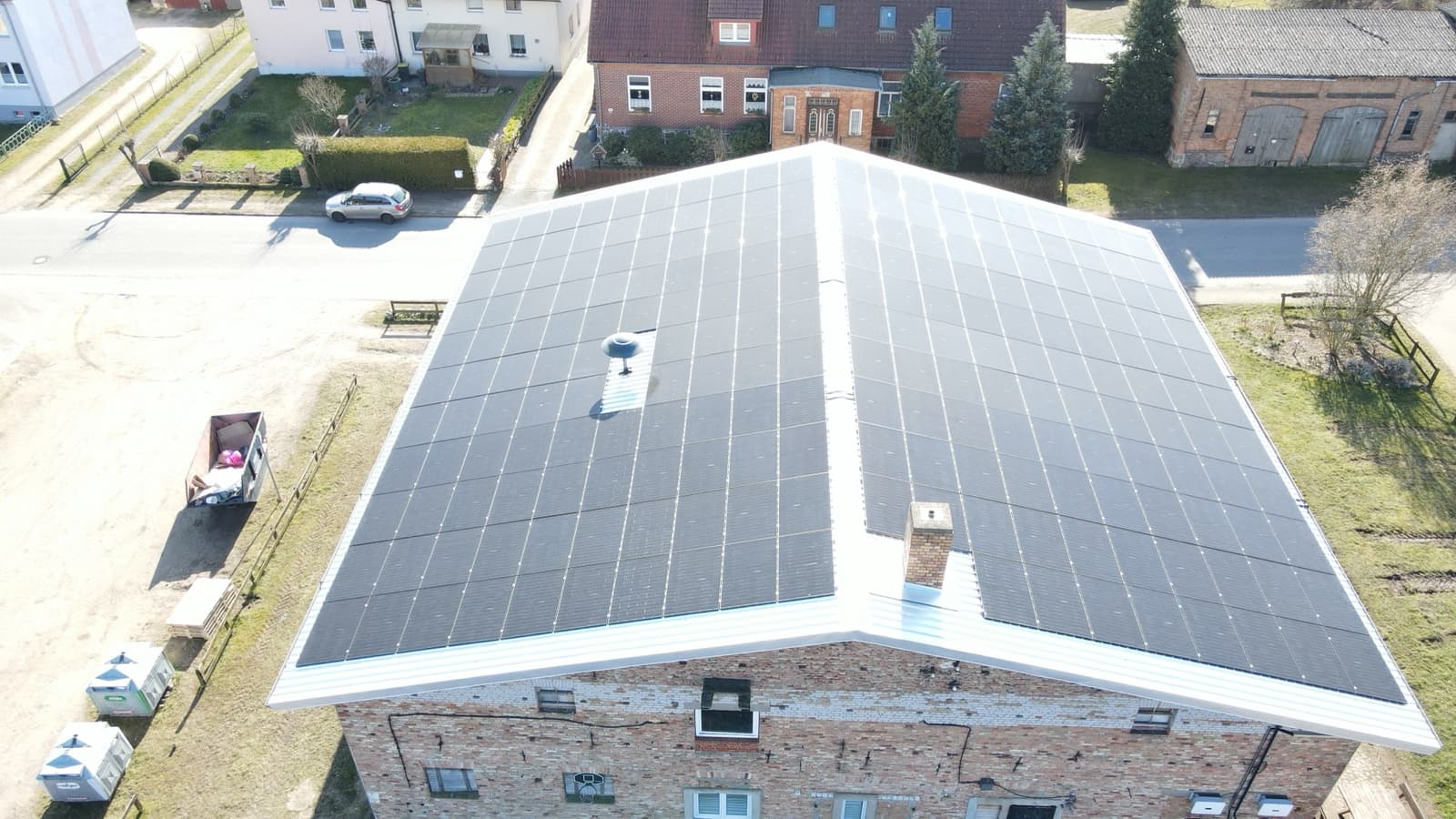
Klein Vielen
97.47 kWp
- Type
- Rooftop system
- Federal state
- Mecklenburg-Western Pomerania
- In operation since
- 2025
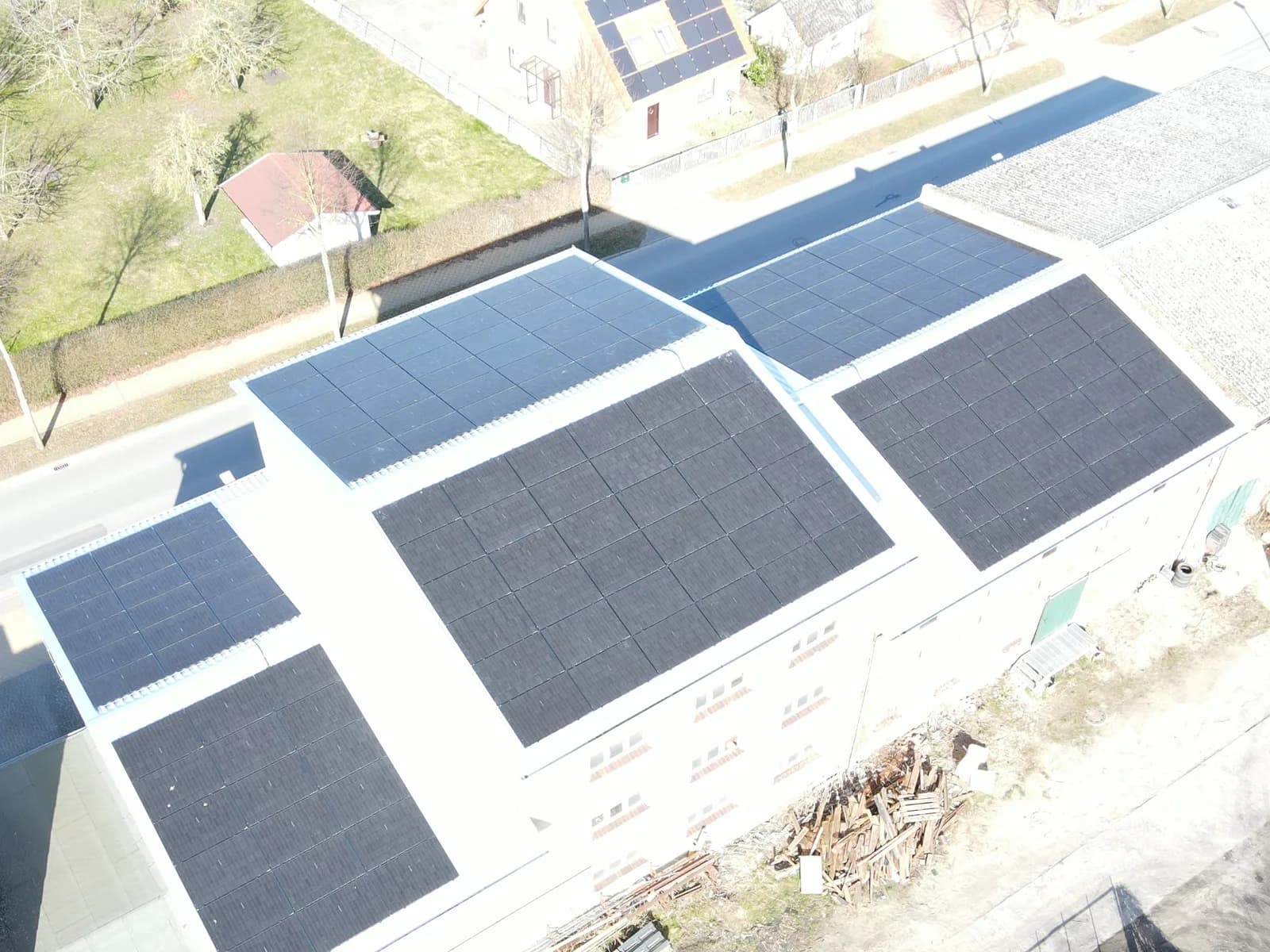
Penzlin
80.10 kWp
- Type
- Rooftop system
- Federal state
- Mecklenburg-Western Pomerania
- In operation since
- 2025
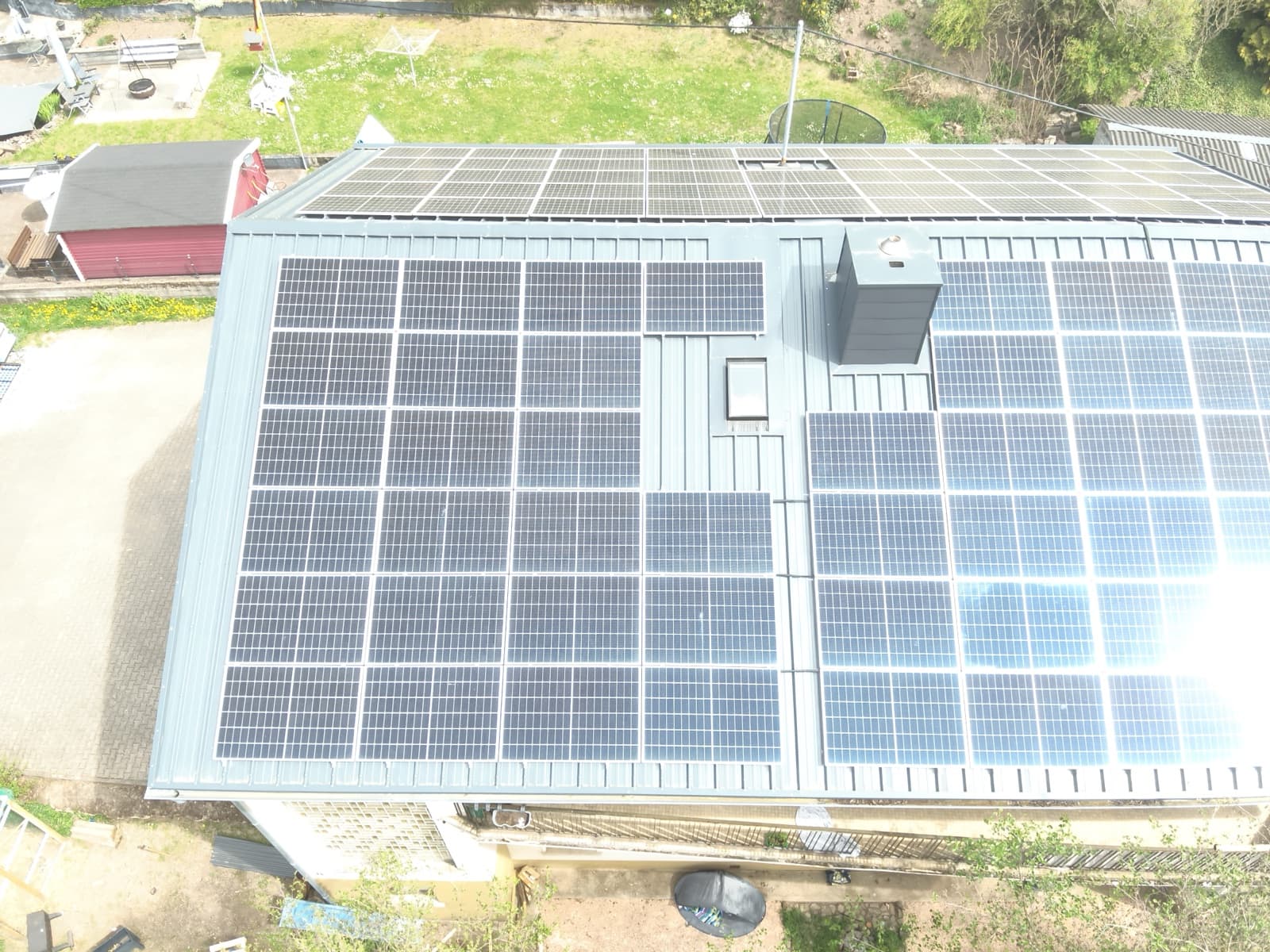
Nohen
70.52 kWp
- Type
- Rooftop system
- Federal state
- Rhineland-Palatinate
- In operation since
- 2025
Grid connection and high voltage
Our background: commissioning and quality assurance at substations and offshore grid connections.
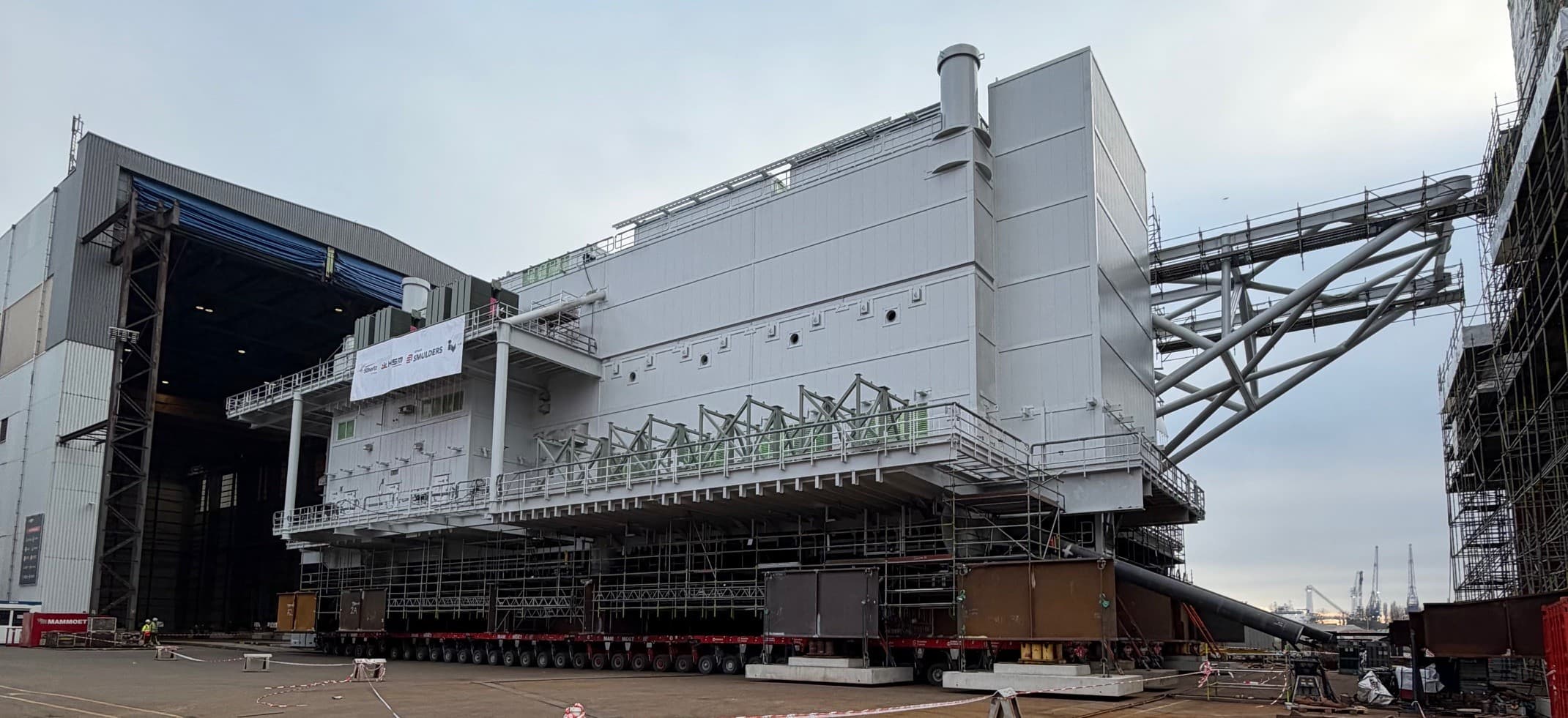
Offshore grid connection · Baltic Sea
Gennaker and Ostwind 3 offshore substations
Two offshore substation platforms for the Gennaker wind farm in the German Baltic Sea and 50Hertz’s Ostwind 3 grid connection project: involvement in installation and commissioning, focusing on secondary systems and quality assurance.
Most recently for 50Hertz
On behalf of 50Hertz Offshore GmbH: quality assurance of the secondary systems in a substation of an offshore grid connection – cabinet and terminal inspections, punch lists and test records in line with the transmission system operator’s safety and compliance rules.
Commissioning onshore and offshore
More than 20 years of commissioning and quality assurance in wind energy, including projects for the transmission system operators (TSOs) 50Hertz and TenneT, in international teams.
66 kV and 220 kV
Project experience at 66 kV and 220 kV substations, including the complete protection and secondary systems.
Licensed electrical contractor: grid connection, testing, commissioning
StromWert Erneuerbare Energien GmbH is registered as an electrical installation business in the installer register of Stromnetz Berlin GmbH (main registration) and as a guest installer with Westnetz, Avacon Netz, Schleswig-Holstein Netz, among others. Switching authorisation for medium-voltage installations, with assignments in Germany and abroad; switching is always carried out within the plant operator’s own authorisation framework.
Testing to DIN EN 62446-1
Before handover we test and document every system to DIN EN 62446-1. You receive the complete test records and system documentation.
Grid connection from a single source
Application to the DNO, agreement on metering concept and meter location, commissioning, completion notice and registration in the Marktstammdatenregister (the national register of generation and storage units).
Quality assurance at every stage
Fixed inspection steps from incoming materials through installation to commissioning. Anything that is not right is fixed before handover.

About us
StromWert is a licensed electrical contractor based in Berlin. Responsible for design and electrical work is Jan Gerstein, Managing Director, a trained electrician with more than 20 years in wind energy, above all in commissioning and quality assurance onshore and offshore. We bring this way of working to every system: test, document, and only then switch on.
Single-family home?
We offer solar PV for newly built single-family homes under our eigenvolt brand: eigenvolt.ai
Frequently asked questions
Which documents do you need for an initial assessment?
The load profile from your meter for the last twelve months (quarter-hourly values), a recent electricity bill and, if available, the data of your PV system. For the execution phase we also need a site plan and photos of the main distribution board and the installation area.
Where do I get my load profile?
Where demand is metered, your metering point operator or your electricity supplier provides the quarter-hourly values, usually as an Excel or CSV file.
Do I need a PV system to have a battery?
No. To cap load peaks, a battery also works without a PV system. With PV, higher self-consumption comes on top.
May the battery charge from the grid?
Grid charging, self-consumption and feed-in place different requirements on metering and billing. For your site we check which operating mode fits your electricity contract, the grid connection and any possible funding. This determines the metering concept and the battery controls.
Does a battery pay off at a feed-in-only plant?
Usually not: without on-site consumption the biggest lever, self-consumption, is missing. We still run the numbers and tell you openly.
What does a commercial battery cost?
That depends on capacity, power, installation location and grid connection. We give you a fixed price in writing once we have seen your data.
Send us your load profile.
You will get an honest assessment of whether a battery pays off for you. Phone: +49 160 96606063